If You Understand Italian, Why Is It So Hard to Speak It?
If you’ve ever thought, “I understand Italian, but I can’t speak it well,” you’re not alone. I remember a conversation I’ve had… hundreds of times.
A Spanish speaker says to me:
“Well, Italian is easy, right? We can understand each other.”
And I smile. Because I know exactly what comes next.
Yes, we understand each other. A lot.
But I also know that, sooner or later, the other side appears:
👉 “I understand Italian, but I can’t speak it well.”
👉 “I get confused when I try to speak.”
👉 “I freeze.”
And that’s the truth that almost nobody talks about.
Learning Italian as a Spanish speaker may seem easy… but speaking Italian correctly is much more complex than it looks.
Why?
Because our languages are so similar that they create a very specific problem:
👉 mixing Spanish and Italian
The Real Problem: Interference Between Spanish and Italian
This is where something crucial comes into play: linguistic interference.
When a Spanish speaker learns Italian, the brain tries to help by reusing what it already knows.
But that “help” often causes:
- confusion between similar words
- false friends between Italian and Spanish
- Spanish sentence structures transferred into Italian
- common mistakes in Italian for Spanish speakers
And little by little something very specific happens:
You start doubting.
You lose fluency.
You freeze when speaking Italian.
It’s not that you don’t know the language.
It’s that you’re mixing two systems without realizing it.
Why I Understand Italian but Don’t Speak It (and How to Stop Mixing Spanish and Italian)
From the perspective of Neurolanguage Coaching, this has a clear solution:
👉 train awareness, not just study
Because the problem is not a lack of knowledge, but a lack of mental clarity when using it.
The Day I Started Writing Down My Mistakes
In my own journey as a bilingual speaker, there was a key moment.
I realized that I wasn’t making random mistakes.
They were always the same ones.
So I started doing something very simple:
creating an interference notebook.
I wrote down:
- words I confused
- false friends
- incorrect structures
And something changed.
By making those Spanish-Italian interferences visible, my brain started detecting them before I made them.
👉 A kind of “mental switch” turned on.
And that small moment of awareness is what allows you to gradually stop mixing Spanish and Italian over time.
Stop Fighting Your Mistakes
Many students want to eliminate mistakes as quickly as possible.
But that usually creates even more blockage.
Instead:
- observe your mistakes
- identify them
- understand them
When you do this, mistakes stop being a source of frustration and become useful information.
And that accelerates your learning.
Speaking Italian Without Translating: The Key Shift
One of the biggest mistakes when learning Italian is this:
👉 constantly thinking in Spanish
Most learners ask themselves:
“How do you say this in Italian?”
But that question activates translation…
and translation creates interference.
The shift is this:
👉 “How does this work in Italian compared to Spanish?”
This approach:
- reduces language interference
- improves fluency in Italian
- helps you speak Italian correctly
Repeating with Intention to Improve Spoken Italian
Repeating without intention does not work.
But repeating with awareness does.
When you practise:
- listen to how real Italian sounds
- exaggerate correct structures
- notice when Spanish starts appearing
This type of practice is essential for improving spoken Italian without blocking yourself.
The reality: why speaking Italian is difficult for Spanish speakers
Here’s something important: interference does not disappear overnight.
But something much more valuable does happen:
👉 they lose their power
👉 they stop blocking you
👉 your fluency improves
If you work with awareness, progress becomes inevitable.
I say this as a language coach… and as a bilingual speaker.
Conclusion: understanding Italian is not the same as speaking it
Understanding Italian as a Spanish speaker is easy.
But speaking it well requires something more:
- awareness
- intentional practice
- mental training
If you want to stop saying
👉 “I understand Italian but I can’t speak it well”
you need to change the way you learn.
Italiano Consciente: the next step to speaking with confidence
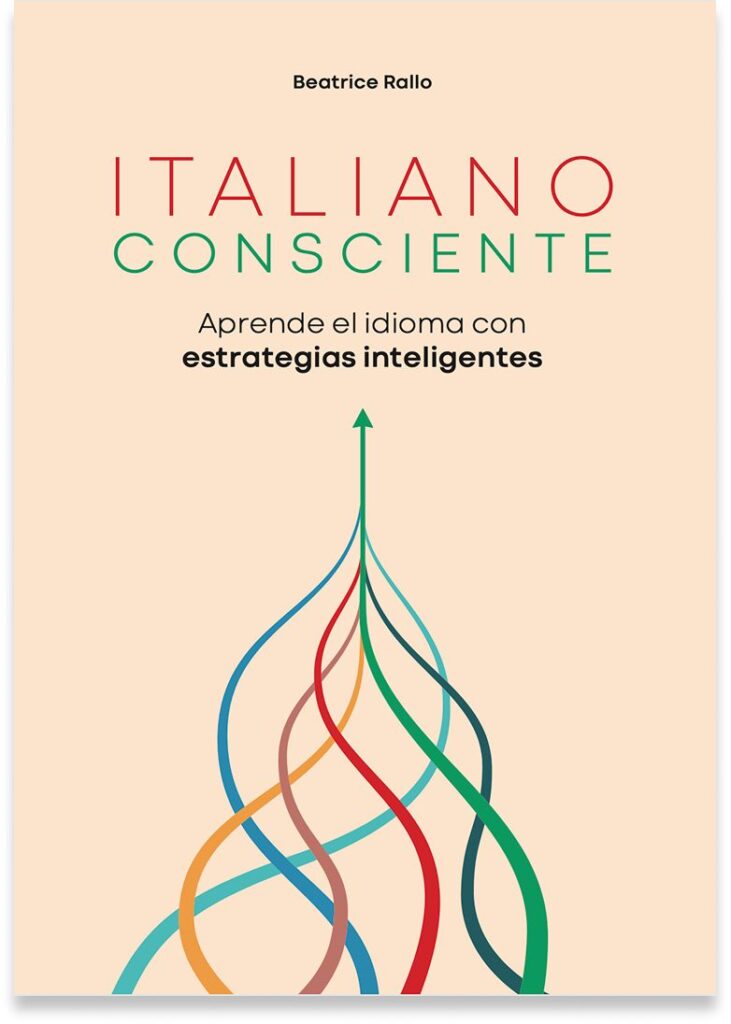
If you want to go deeper into this process, in my book “Italiano Consciente” you will find:
- clear frameworks
- explanations of language interference
- practical strategies
- tools to help you speak Italian with confidence
👉 It is a guide designed to help you move from understanding… to speaking well. You can find it here:
Do you want to learn Italian without blocking yourself?
Not sure how to start?
My courses are designed for Spanish speakers who want to:
- stop mixing Spanish and Italian
- speak fluently
- build confidence from the start
Whether you are just starting or want to improve your level, I guide you through the process.
Looking for a unique learning experience? Explore my programs and find the one that suits you best.
FAQ: common questions about learning Italian
Why do I understand Italian but can’t speak it well?
Because the similarities between Spanish and Italian create interference that affects your fluency when speaking.
How can I stop mixing Spanish and Italian?
By identifying your mistakes, developing awareness, and avoiding direct translation from Spanish.
Is it normal to freeze when speaking Italian?
Yes. It is very common among Spanish speakers, but it can be overcome with conscious practice.